 English
 中文
中文 عربي
عربي Русский
 Deutsch
 Français
 Türkçe
 Italiano
 Español
Hello everyone,
Welcome to the latest episode of Fasteners, Roofs & Time Logic.
Recently, several major construction markets have been putting more attention on structural quality, construction coordination, and inspection practices.
At the same time, steel continues to play an important role in commercial buildings, industrial facilities, warehouses, infrastructure, and renewable-energy projects.
These developments made me think about a simple question:
What actually makes a steel structure work well?
Most people would probably say:
- Good materials.
- Good design.
- Good workmanship.
All of these are correct,but they are only part of the picture.
In practice, successful steel construction is usually the result of many small decisions working in the same direction.
So today, let's forget the complicated formulas for a moment.
Here are five practical principles worth remembering when looking at steel construction.
Think in Systems, Not Individual Parts
A steel building contains many different members:
- Columns.
- Beams.
- Bracing.
- Connections.
- Fasteners.
Each has its own function.
But none of them works completely independently.
The performance of one element is influenced by the elements around it.
This is similar to a football team.
Having eleven talented players does not automatically create a great team.
The important question is:
How well do they work together?
Structural engineering follows a similar principle.
Instead of asking only:
''Is this component strong enough?''
we should also ask:
''How does this component contribute to the overall structural system?''
That change in perspective is surprisingly valuable.
Design Is Only the Beginning
A drawing represents an engineering intention.
A construction site represents the practical execution of that intention.
Between the two are many small decisions:
- Measurement;
- Positioning;
- Installation sequence;
- Tolerances;
- Tools;
- Temporary arrangements;
- Field coordination.
This is why good construction is not simply about following drawings.
It is about maintaining consistency between:
design → fabrication → transportation → installation.
The better these stages communicate with each other,
the more predictable the final result becomes.
''More'' Is Not Always ''Better''
This is one of the most interesting principles in engineering.
More material?
→ Not necessarily better.
Higher strength?
→ Not necessarily better.
Heavier structure?
→ Not necessarily better.
Engineering is about finding the appropriate balance between:
- Strength;
- Stiffness;
- Stability;
- Weight;
- Manufacturability;
- Transportation;
- Installation;
- Cost.
Imagine buying a suitcase for a business trip.
A stronger suitcase is not automatically a better suitcase if it is twice as heavy.
The same logic applies to engineering.
The best solution is not necessarily the maximum solution.
It is the solution that provides the right performance for the actual requirement.
Installation Is Part of Engineering
Sometimes construction is treated as the final step.
But in reality, installation can strongly influence the final condition of a structure.
Consider something as simple as:
- Where is the fixing point?
- Which tool is being used?
- How quickly can the fastener penetrate the substrate?
- Is the installation sequence efficient?
- Are the components positioned consistently?
These may sound like small questions.
But on a large project, small questions are repeated many times.
And repetition creates significance.
That is why installation should not be viewed simply as labor.
It is also part of engineering execution.
Small Components Can Have a Big Job
This is perhaps the principle I find most interesting.
- A steel beam may weigh hundreds of kilograms.
- A column may weigh several tonnes.
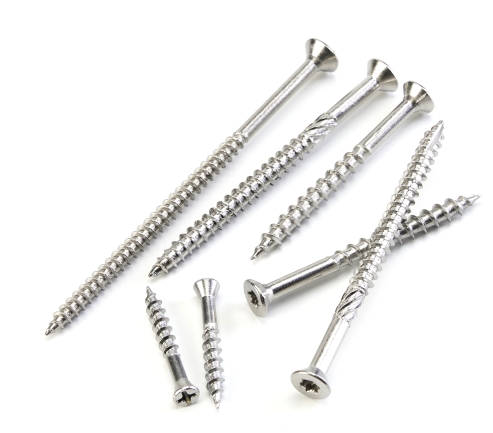
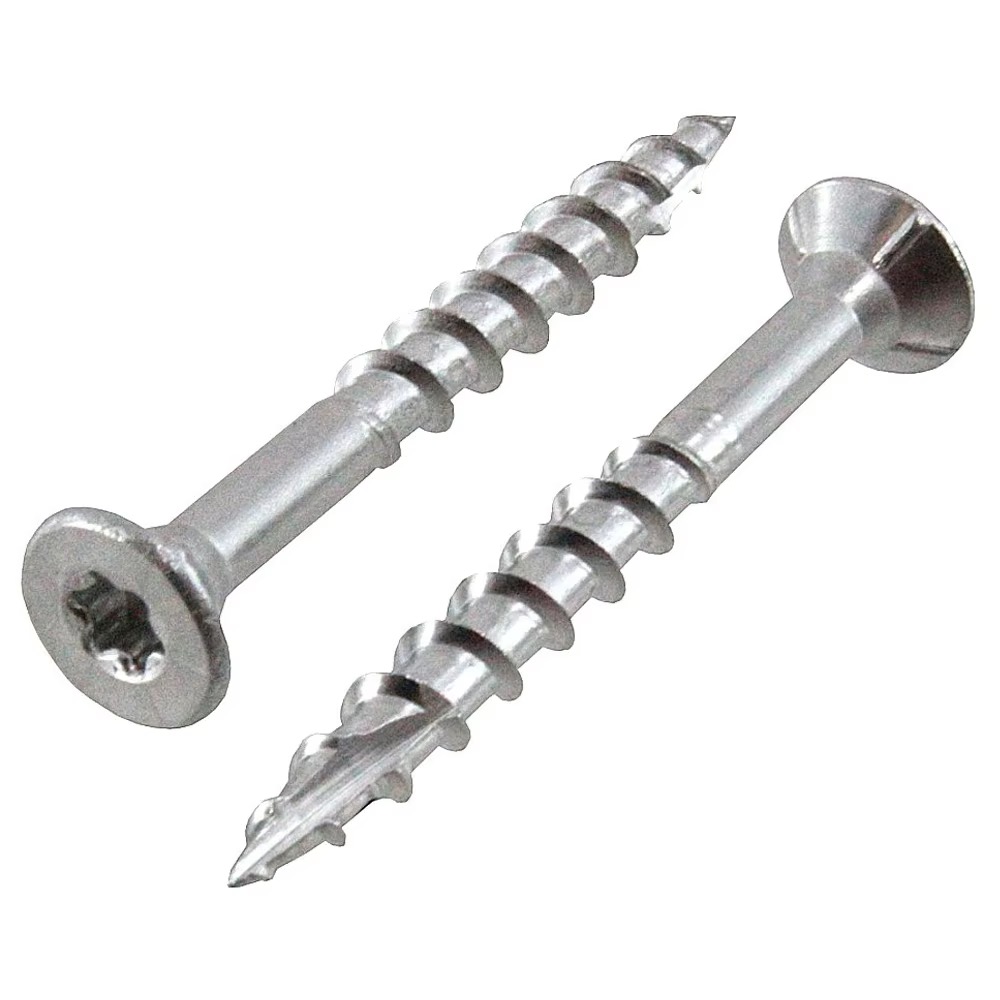
- A fastener may weigh only a few grams.
But the size of a component does not determine the importance of its function.
Fasteners may need to deal with several practical requirements at the same time:
→Drilling performance.
→Mechanical performance.
→Environmental resistance.
→Installation efficiency.
This is where material selection becomes particularly interesting.
Instead of asking one material to perform every task,
why not combine different material advantages?
→Bimetal self-drilling screws are one example of this approach.
- An alloy steel drill point can provide efficient penetration through steel substrates.
- A stainless steel body can provide enhanced corrosion resistance for exposed applications.
In simple terms:
One part is designed to drill.
Another part is designed to resist the environment.
This is not about making the product more complicated.
It is about assigning the right material to the right job.
For steel construction, metal roofing, solar mounting, and other exterior applications, this combination can provide a practical alternative when both drilling capability and corrosion resistance matter.
Five Principles to Take Away
If we simplify today's discussion:
① Think about the whole system.
② Keep design and installation connected.
③ Don't confuse ''more'' with ''better.''
④ Treat installation as part of engineering.
⑤ Give small components the attention their function deserves.
These principles may sound simple.
But good engineering often works exactly this way.
The difficult part is not always knowing a complicated formula.
Sometimes it is simply recognizing which details deserve attention.
Final Thought
A modern steel structure is the result of thousands of decisions.
→ Some are large:
- Structural design.
- Member selection.
- Load calculations.
→ Others are very small:
- A hole.
- A fixing method.
- A tool.
- A fastener.
Yet all of them contribute to the same objective:
building a system that works as intended.
Perhaps that is one of the most useful lessons in engineering:
The importance of a component is not measured by its size, but by the job it has to do.
And sometimes,
the smallest component deserves the most thoughtful decision.