 English
 中文
中文 عربي
عربي Русский
 Deutsch
 Français
 Türkçe
 Italiano
 Español
Failure Is Not an Event
In engineering practice, failure is often treated as something sudden.
A leak appears. A panel deforms. A fastener breaks.
But these are not true failures. They are visible outcomes of invisible processes.
In reality, failure does not begin at the moment of damage. It begins much earlier —when system complexity is simplified into isolated decisions.
Roofing Systems Are Time-Dependent Structures
A roofing system is not static.
It evolves under multiple time scales:
- Immediate installation forces
- Cyclic wind and thermal movement
- Long-term environmental exposure
However, most design and selection decisions are made for initial performance, not long-term behavior.
This creates a fundamental gap:
What works at installation may not survive under time.
The Critical Role of Fasteners
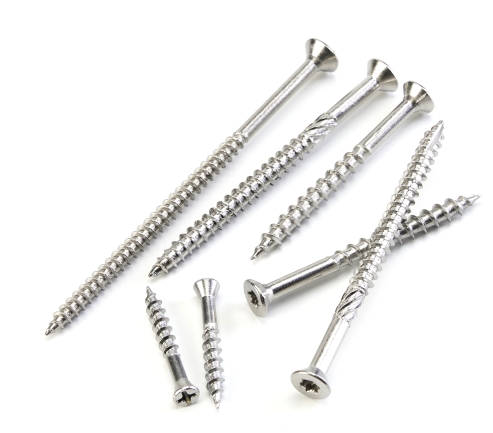
In roofing systems, fasteners are often underestimated.
They are treated as secondary components, yet they operate at the most critical intersection of the system:
- Mechanical load transfer
- Environmental exposure
- Material interface interaction
Because of this, fasteners often become the first point where system imbalance is revealed.
They are not just connectors — they are indicators of system behavior over time.
Corrosion Is a System Process, Not a Material Defect
Corrosion is often misunderstood as a material weakness.
In reality, it is a multi-variable system response, driven by:
- Material compatibility
- Environmental conditions
- Electrochemical potential differences
It does not occur uniformly. It localizes at interfaces — especially where protection is weakest and interaction is strongest.
Interfaces Define Failure
Most structural materials are designed with sufficient strength margins.
But roofing systems rarely fail in the bulk material.
Failure begins at interfaces:
- Between different metals
- Between coatings and substrates
- At fastener contact zones
These are areas where multiple physical mechanisms overlap.
Fasteners exist exactly in this domain.
Bimetal Fasteners as a Response to System Conflict
In roofing engineering, performance requirements are often contradictory:
- High drilling capability is required for installation
- High corrosion resistance is required for service life
A single material often cannot satisfy both.
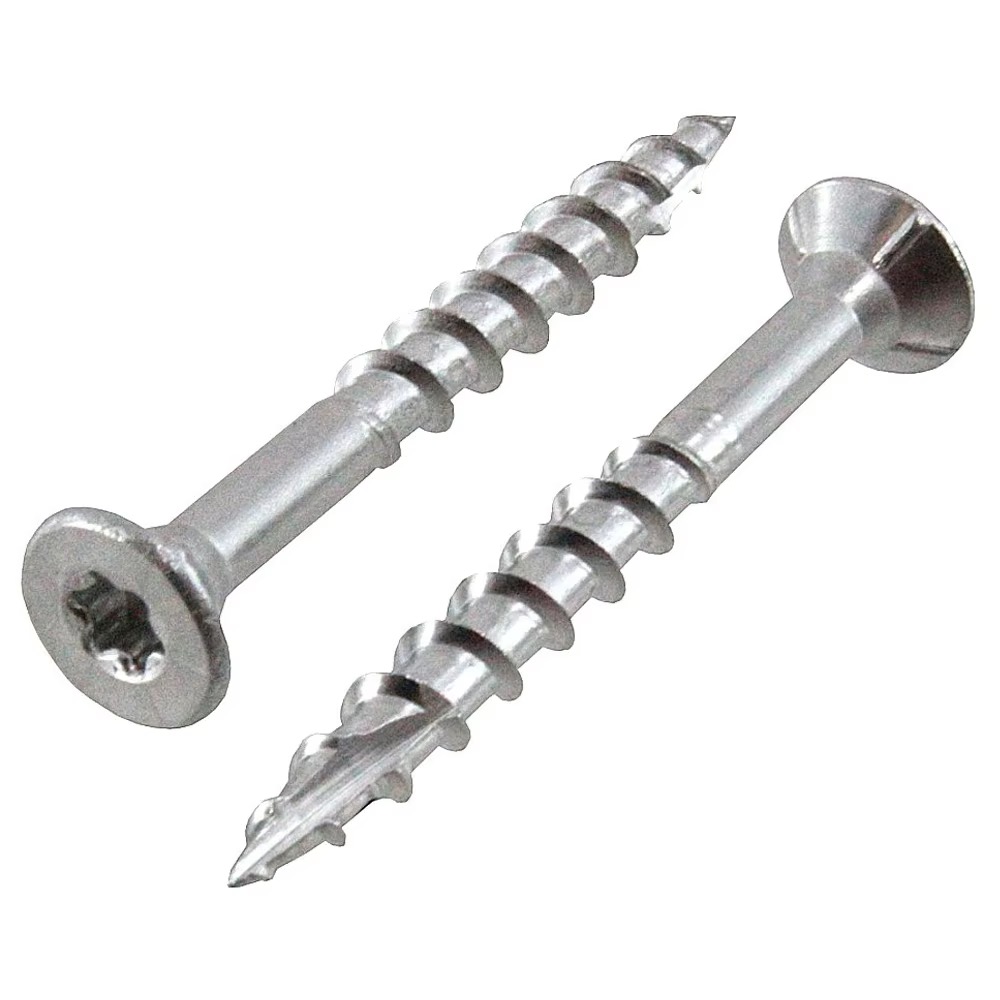
This is where bimetal fasteners represent an engineering solution, not just a product choice.
By combining:
- A hardened carbon steel drill point for penetration
- A stainless steel body for corrosion resistance
they resolve a fundamental material conflict within the system.
The question is no longer ''what is stronger'' but how materials can coexist over time without degradation of function.
Engineering Is the Management of Time and Uncertainty
No roofing system operates in controlled conditions over its lifetime.
Variations in:
- Climate
- Installation quality
- Material behavior
are unavoidable.
Engineering is therefore not about eliminating uncertainty, but about designing systems that remain stable under it.
Final Reflection
Failure is rarely sudden.
It is accumulated — through assumptions, simplifications, and disconnected decisions.
What appears as failure on-site is often only the final stage of a long system evolution.
Because in roofing systems, performance is not defined at installation — it is defined over time.
And fasteners, more than any other component, quietly record that evolution.